A Colony Built on Suffering
To understand why the Battle of Vertières mattered so much, you need to understand what Saint-Domingue actually was.
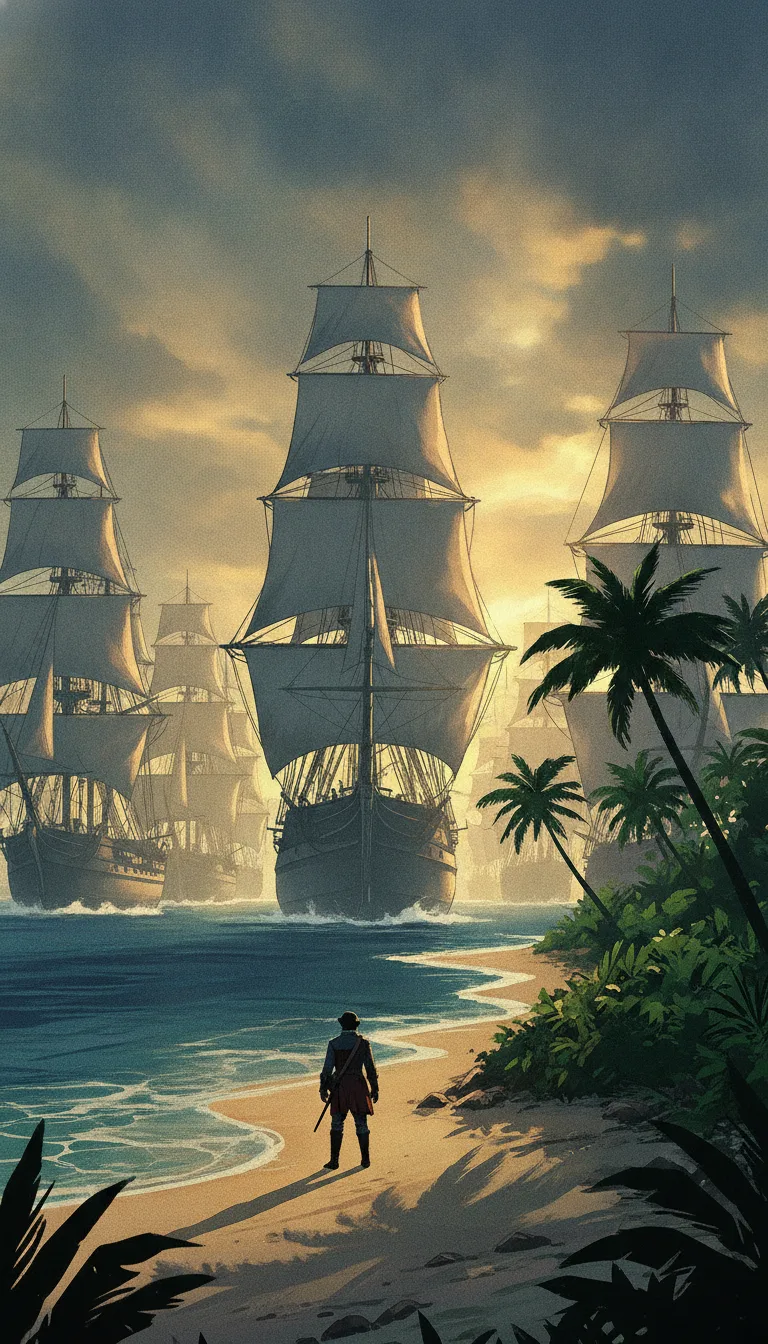
By the late 18th century, the French colony of Saint-Domingue — the western third of the island of Hispaniola — was the single most profitable colony on Earth. It produced roughly 40% of Europe's sugar and more than half of its coffee. French merchants, plantation owners, and the Crown itself grew extraordinarily wealthy from this small Caribbean island.
That wealth had a foundation: approximately 500,000 enslaved Africans, outnumbering the white colonist population by nearly ten to one. Conditions on Saint-Domingue's plantations were among the most brutal in the entire Atlantic world. Life expectancy for enslaved workers was so short that plantation owners calculated it was cheaper to import more people from Africa than to allow families to form. The colony consumed human lives the way it produced sugar — in staggering quantities.
This is the world that the revolution sought to destroy.
The Revolution Before the Final Battle
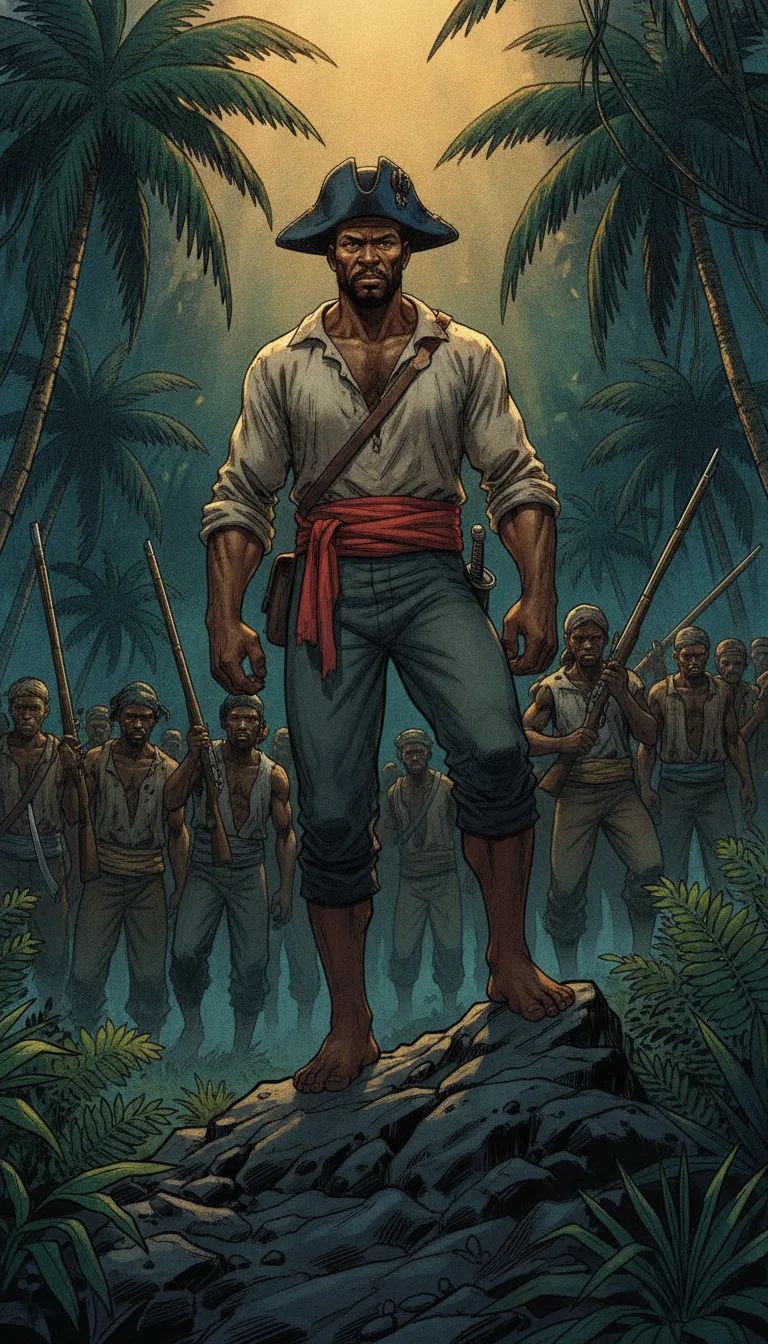
The uprising that began in August 1791 was not a sudden explosion. It was the result of decades of accumulated resistance, combined with the ideological shock of the French Revolution's own promises of liberty and equality — promises that France had no intention of extending to enslaved people.
The revolutionary leader Toussaint Louverture emerged as a military and political genius of the first order. He navigated shifting alliances between France, Spain, and Britain with remarkable skill, eventually securing the abolition of slavery in Saint-Domingue by 1794. He then helped drive British forces — who had invaded hoping to seize the colony — off the island entirely by 1798.
Napoleon Bonaparte, however, had different plans. When he came to power, he saw Saint-Domingue not as a free territory but as a lost asset to be recovered. His vision extended further: a French empire in the Americas, anchored by Louisiana and supplied by Caribbean sugar. Saint-Domingue was essential to that dream.
In 1801, he dispatched an expedition of approximately 40,000 soldiers — many of them veterans of his European campaigns — under the command of General Charles Leclerc, who was also Napoleon's brother-in-law. Their instructions included re-establishing French authority and, covertly, re-establishing slavery.
Toussaint Louverture was eventually captured through treachery in 1802 and died in a French prison in April 1803, cold and alone in the Jura mountains. But the revolution did not die with him.
Jean-Jacques Dessalines and the Final Reckoning
Command passed to Jean-Jacques Dessalines, a man who had himself been enslaved and who bore the scars of whipping on his back. Where Toussaint had been a diplomat, Dessalines was something else entirely — a commander of absolute ferocity and total clarity of purpose. He had no interest in negotiation.
By late 1803, the French expedition was collapsing. Yellow fever had killed tens of thousands of their soldiers, including Leclerc himself. The British Royal Navy, now at war with France again, blockaded the island and cut off French resupply routes. The Haitian forces — formally calling themselves the Indigenous Army — controlled most of the territory.
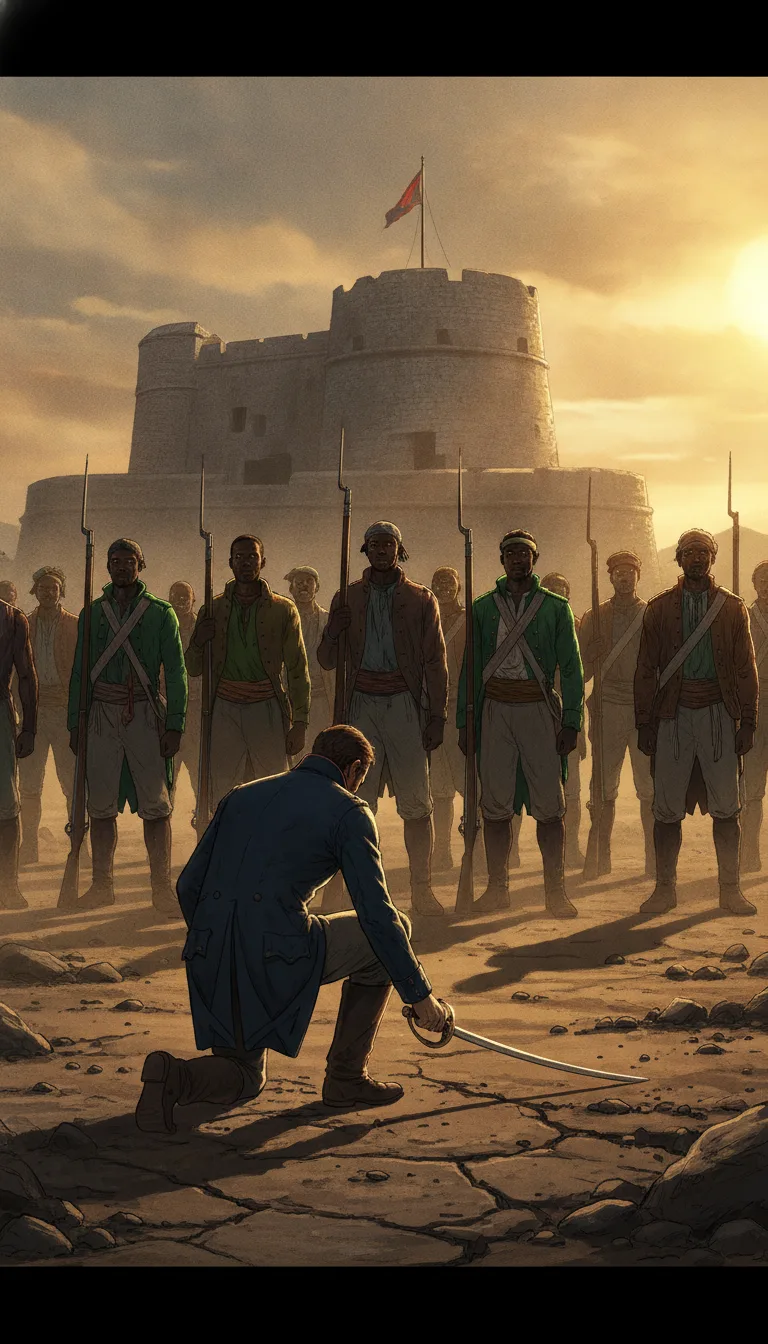
The French retreated to their last stronghold: the harbor town of Cap-Haïtien, defended by the fortified position at Vertières. On November 18, 1803, Dessalines ordered the final assault.
The battle was brutal and close. Haitian forces attacked across open ground against well-positioned French artillery. The soldier François Capois — later known as Capois-la-Mort, "Capois the Death" — became legendary that day: his horse was shot from under him, he rose, his hat was blown off by cannon fire, he raised it, and continued advancing. According to accounts, French soldiers briefly stopped firing to applaud his courage before the fighting resumed. The French surrendered on November 19th.
Why This Victory Reshaped the World
The consequences of Vertières reached far beyond the Caribbean. Napoleon, recognizing his American ambitions were finished, sold the Louisiana Territory to the United States just months later — doubling the size of the young American republic. Haiti's revolution, in a very real sense, shaped the geography of North America.
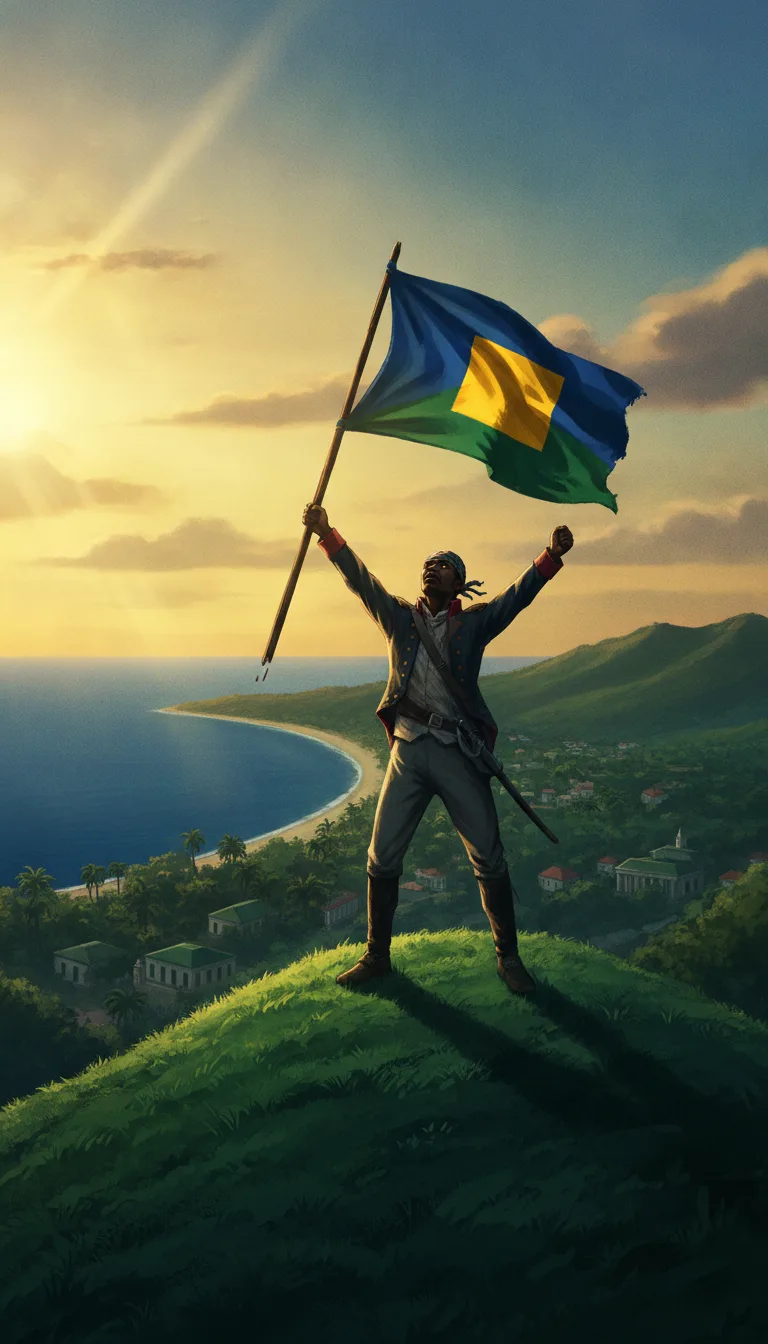
On January 1st, 1804, Dessalines declared independence and renamed the nation Haiti, drawing from the indigenous Taíno name for the island. It was the first nation in the Western Hemisphere to permanently abolish slavery, and the first modern state to be founded by people who had freed themselves from enslavement.
The surrounding slave-holding powers — the United States, France, Britain — were deeply threatened by what Haiti represented. France demanded enormous financial reparations as the price of diplomatic recognition, a debt Haiti only finished paying in 1947. The isolation imposed on Haiti by hostile nations shaped its poverty for generations.
The people who climbed that hill at Vertières knew none of that future. They knew only what was behind them, and what they were fighting for.