A Student Who Was Not Supposed to Be There
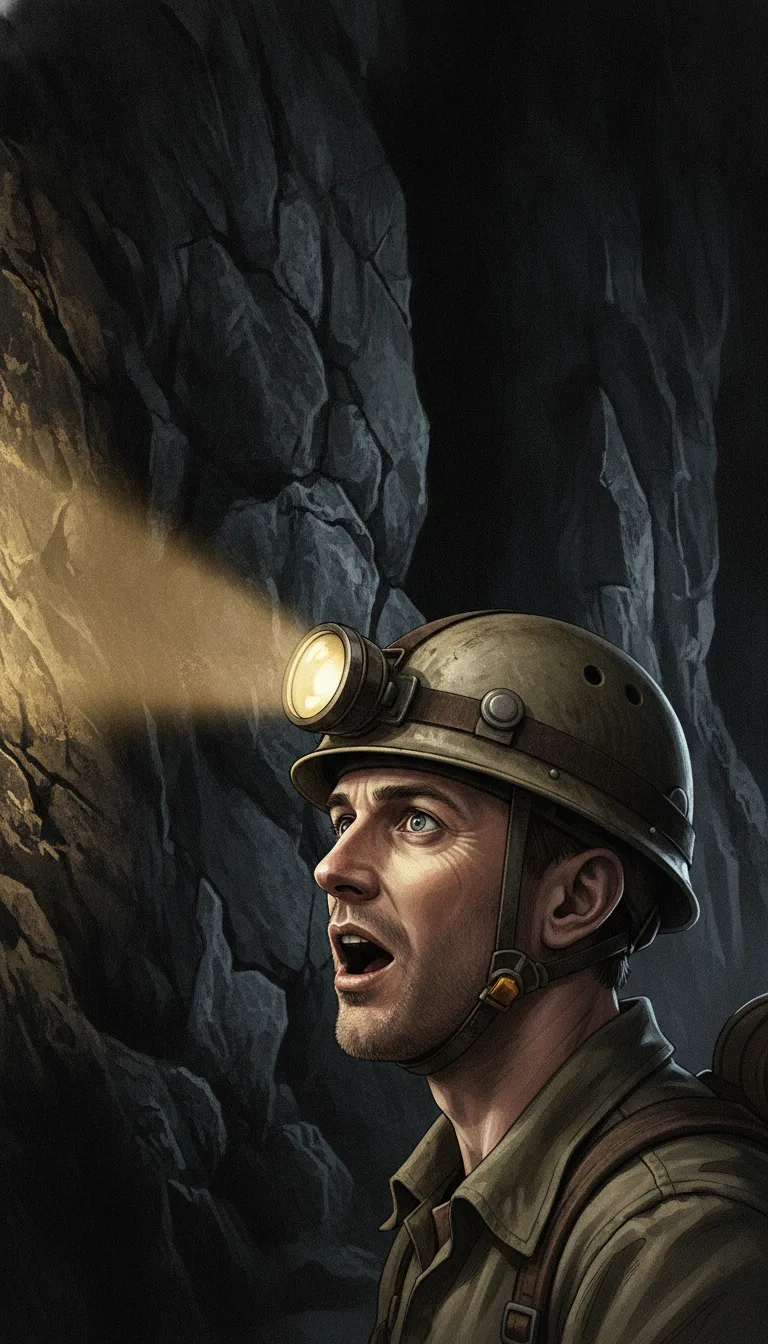
Warsaw in the 1860s was not a free city. Poland had been divided between foreign empires for nearly a century, and Russian authorities controlled education tightly. Women could not attend university. Science was not considered their domain.
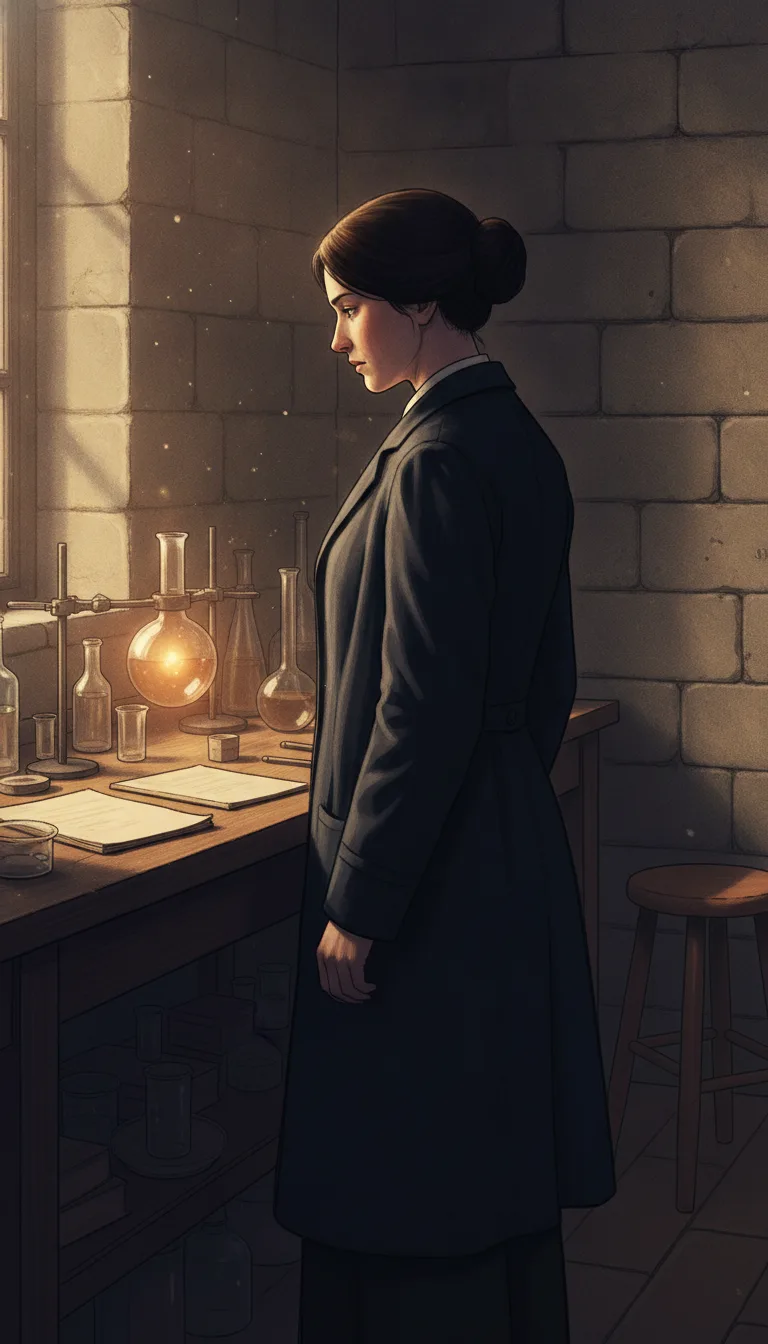
Maria Sklodowska — the woman the world would later know as Marie Curie — refused to accept that boundary. She and her sister Bronya made a private agreement: Maria would work as a governess to fund Bronya's medical studies in Paris. Once Bronya graduated, she would return the favour. It was a quiet act of solidarity that changed the history of science.
When Maria finally arrived in Paris in 1891, she survived on near-nothing. Her apartment was so cold in winter that the water in her washbasin froze overnight. She ate so little that she sometimes fainted during lectures. Yet she finished first in her physics degree, and second in mathematics. She was not just surviving — she was outperforming everyone around her.
The Question Nobody Had Thought to Ask
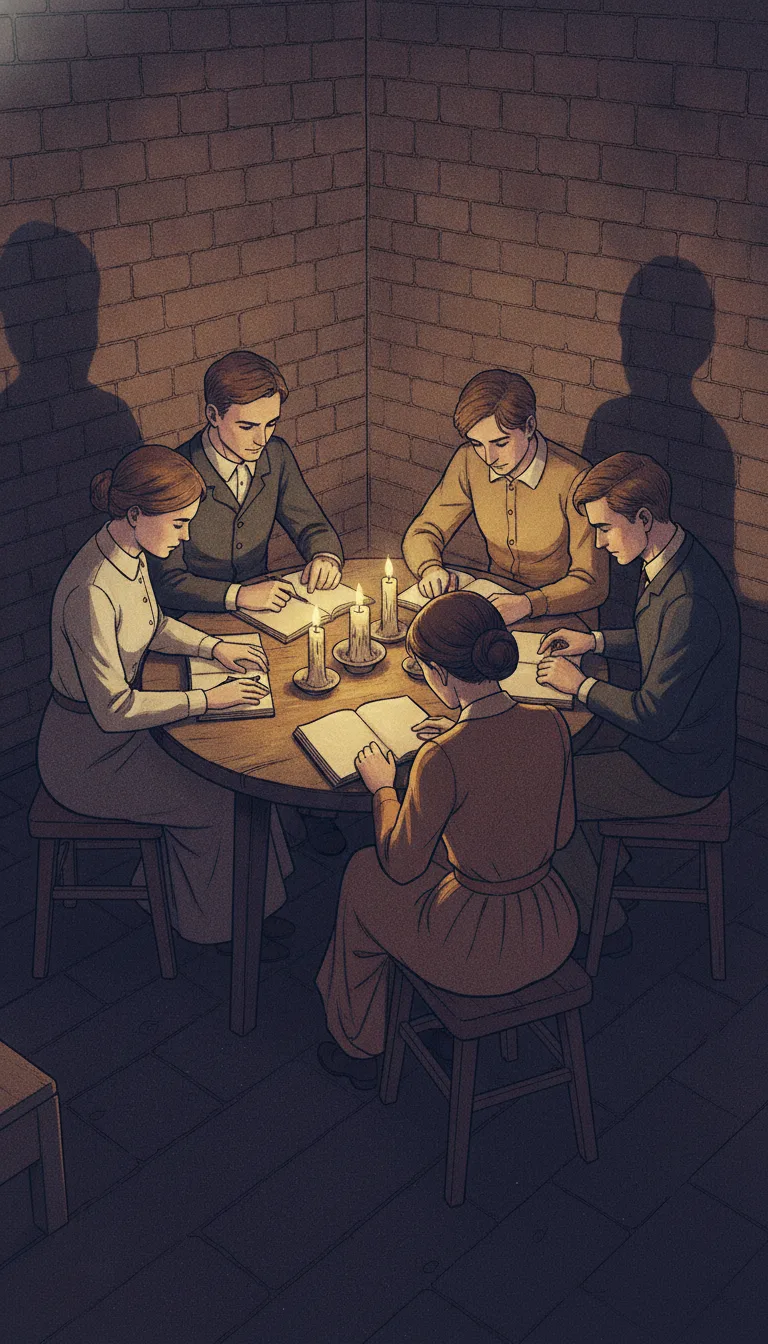
By the late 1890s, the scientific world was buzzing with discovery. Wilhelm Röntgen had just found X-rays in 1895. Henri Becquerel had noticed that uranium salts could expose a photographic plate, even in total darkness. It was strange. It was noted. And then, essentially, it was set aside.
Marie Curie picked up where Becquerel stopped — and asked a different, more precise question. Not what was uranium doing, but why. Was this energy coming from outside, absorbed from the environment? Or was it coming from inside the atom itself?
To answer this, she used an electrometer — a device partly developed by her husband Pierre — to measure with extraordinary precision how much electrical charge uranium rays produced in the air around them. Her measurements were meticulous and reproducible. Her conclusion was revolutionary: the radiation was a property of the uranium atom itself. It was not a reaction. It was not borrowed energy. It came from within.
This was a profound shift in how scientists thought about matter. The atom, long assumed to be a stable, passive building block, was apparently doing something on its own. Marie gave this phenomenon its name: radioactivity.
Two Elements, Discovered Together
While testing different uranium ores, Marie noticed something unexpected. The ore called pitchblende produced far more radiation than pure uranium alone could explain. Something else was in there — something unknown, and powerfully active.
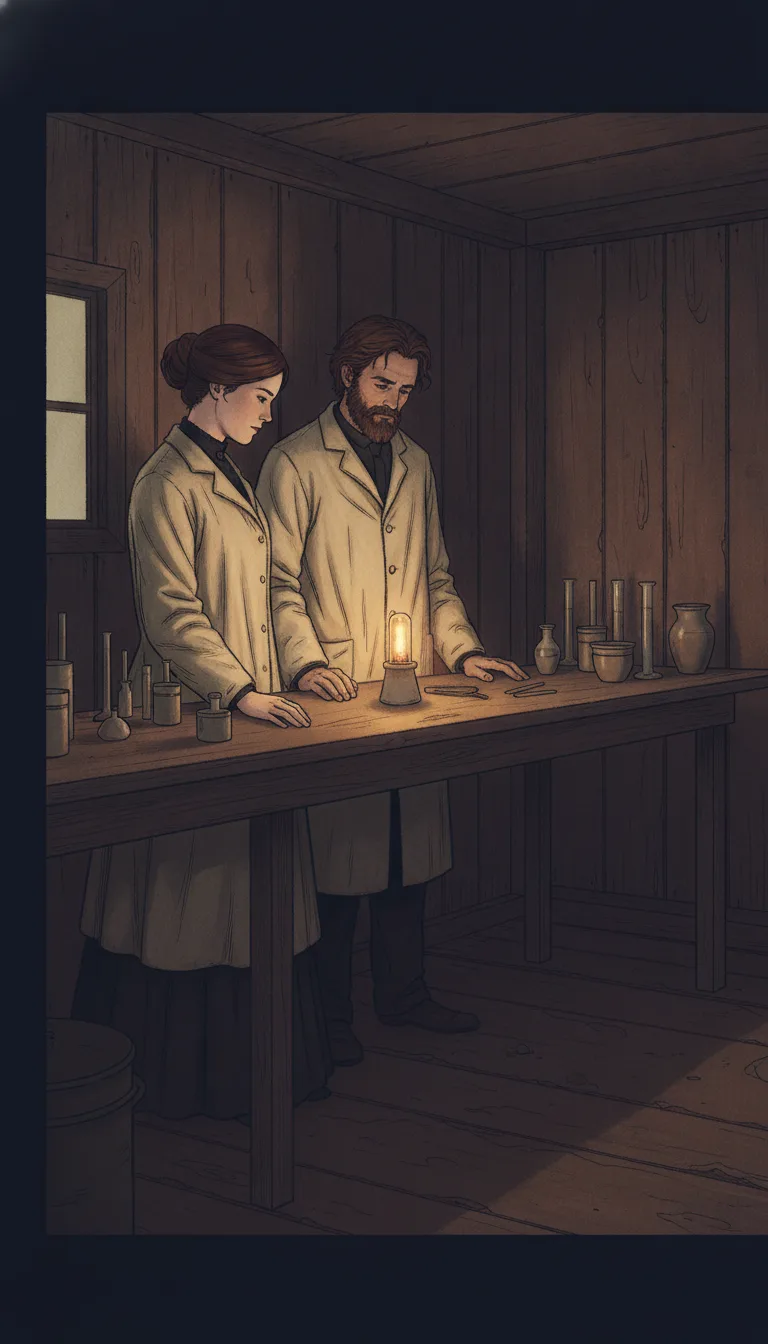
Pierre immediately abandoned his own research to work alongside her. Together, they processed enormous quantities of pitchblende by hand, in a leaking shed that was freezing in winter and suffocating in summer. German chemist Wilhelm Ostwald visited their workspace and later described it as a cross between a stable and a potato cellar.
From tonnes of raw ore, they extracted tiny amounts of two new elements. The first they named polonium, after Marie's occupied homeland — a quiet political statement embedded in a scientific paper. The second was radium, named for its intense radioactivity. Radium was roughly one million times more radioactive than uranium.
What the Nobel Prizes Don't Fully Capture
Marie Curie received the Nobel Prize in Physics in 1903, shared with Pierre and Becquerel. Eight years later, after Pierre had died in a street accident in 1906, she received a second Nobel — this time in Chemistry, for isolating pure radium and studying its properties. She remains the only person to have won Nobel Prizes in two different sciences.
But the formal honours don't capture how much resistance she faced. The French Academy of Sciences never admitted her as a member — she fell one vote short in 1911, the same year she won her second Nobel. Some members simply could not accept a woman in their ranks.
She also paid a physical price she likely never fully understood. The dangers of radiation were unknown at the time. She carried test tubes of radioactive isotopes in her pockets. She worked with radioactive materials for decades without protection. She died in 1934 from aplastic anaemia, almost certainly caused by lifelong radiation exposure.
Why Her Work Still Matters
Radioactivity, as Marie Curie defined it, became the foundation for nuclear medicine, radiation therapy for cancer, and our entire understanding of atomic structure. Every time a patient undergoes a PET scan or receives targeted radiation treatment, the science traces back to her leaking shed and her freezing apartment.
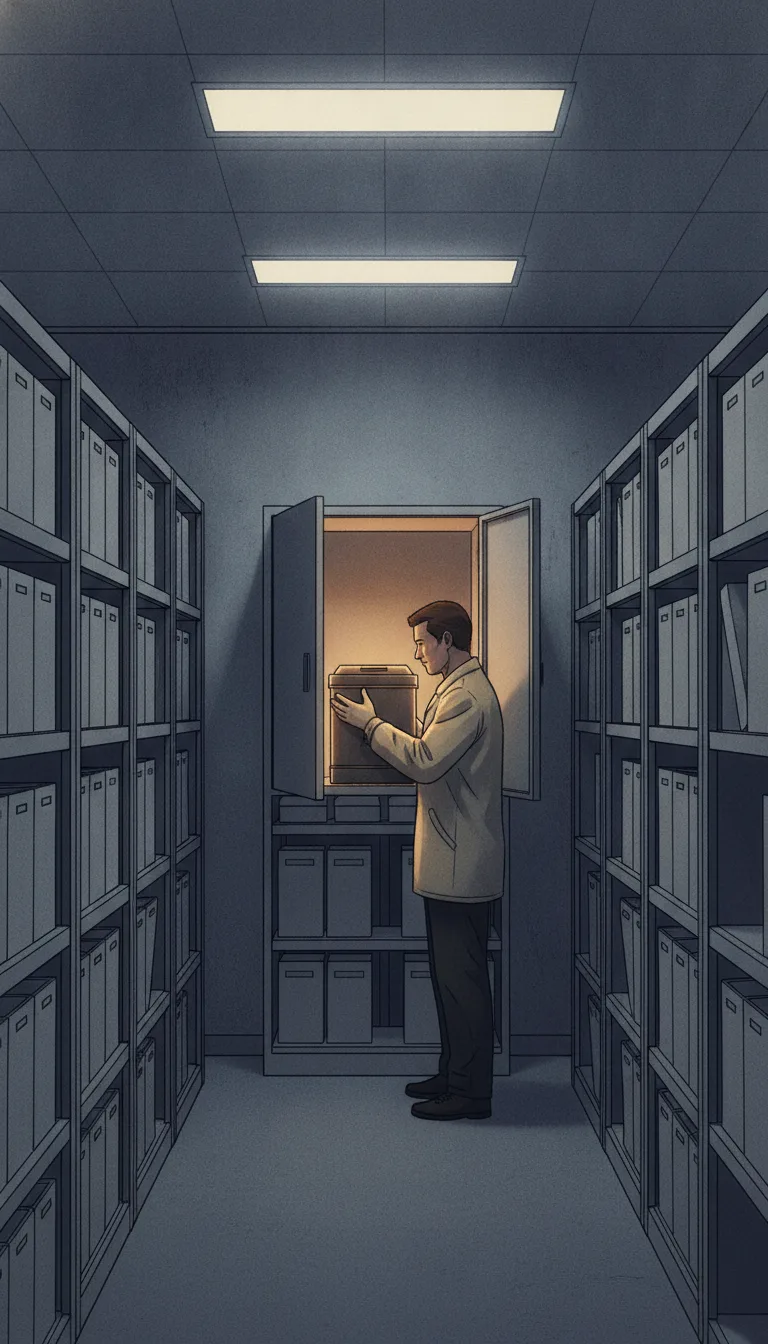
Her notebooks, as mentioned, remain dangerous to this day. They are stored in lead-lined boxes at the Bibliothèque nationale de France. Researchers who wish to consult them must sign a waiver and wear protective clothing.
Marie Curie did not just discover radioactivity. She redefined what matter is, and proved — through sheer persistence — that science has no gender.