A Boy, a Small Plane, and a Superpower's Embarrassment
Mathias Rust was not a spy. He was not on a secret mission. He was a teenager from Hamburg who had held a pilot's license for less than a year and had logged roughly 50 hours of flying time. What drove him east on that late May morning in 1987 was something closer to idealism than recklessness — he wanted to build, as he later described it, "an imaginary bridge" between East and West at the height of Cold War tension. What he actually built was one of the most embarrassing moments in Soviet military history.
The Flight Nobody Stopped
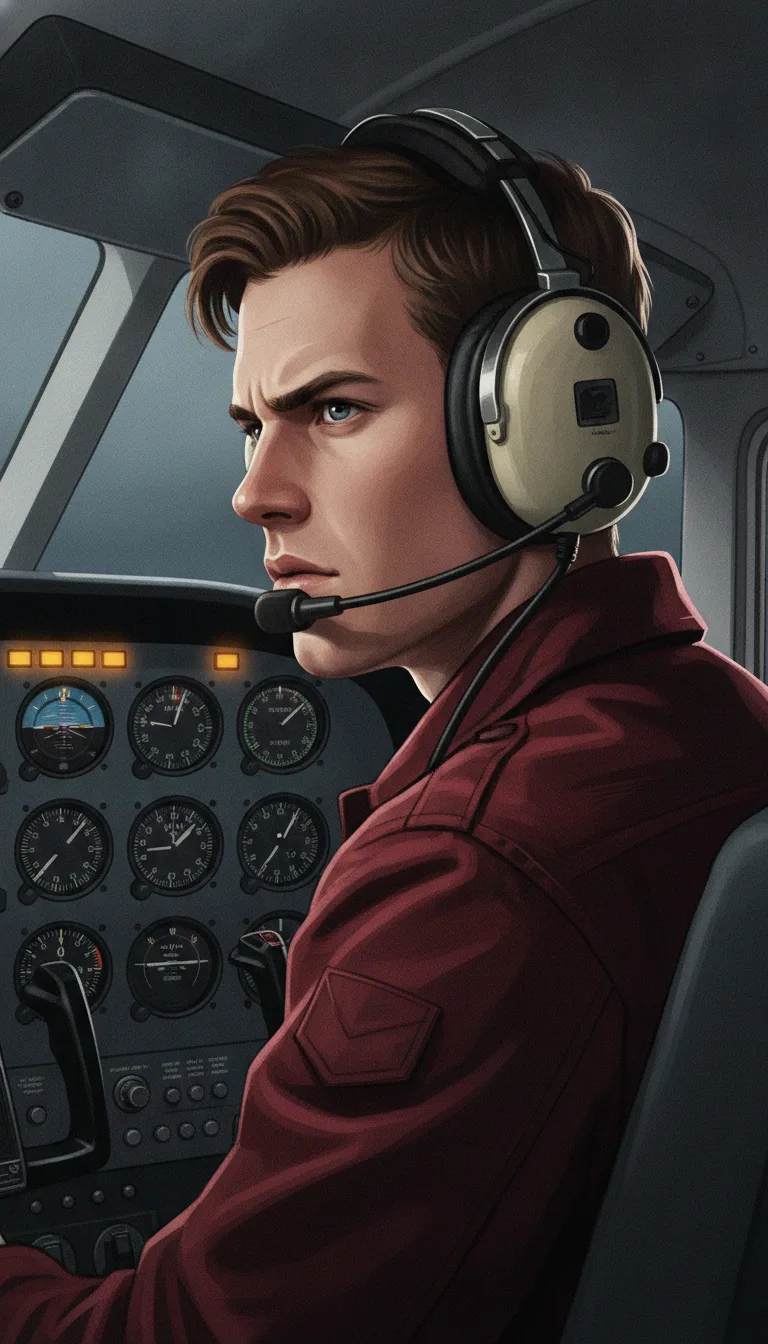
Rust had planned the journey carefully, in his own amateur way. He flew from his home airfield in West Germany to Reykjavik, then to Bergen, then to Helsinki — using the trip itself as practice. On the morning of May 28th, he filed a flight plan for Stockholm, climbed into his single-engine Cessna 172 Skyhawk, and turned east instead.
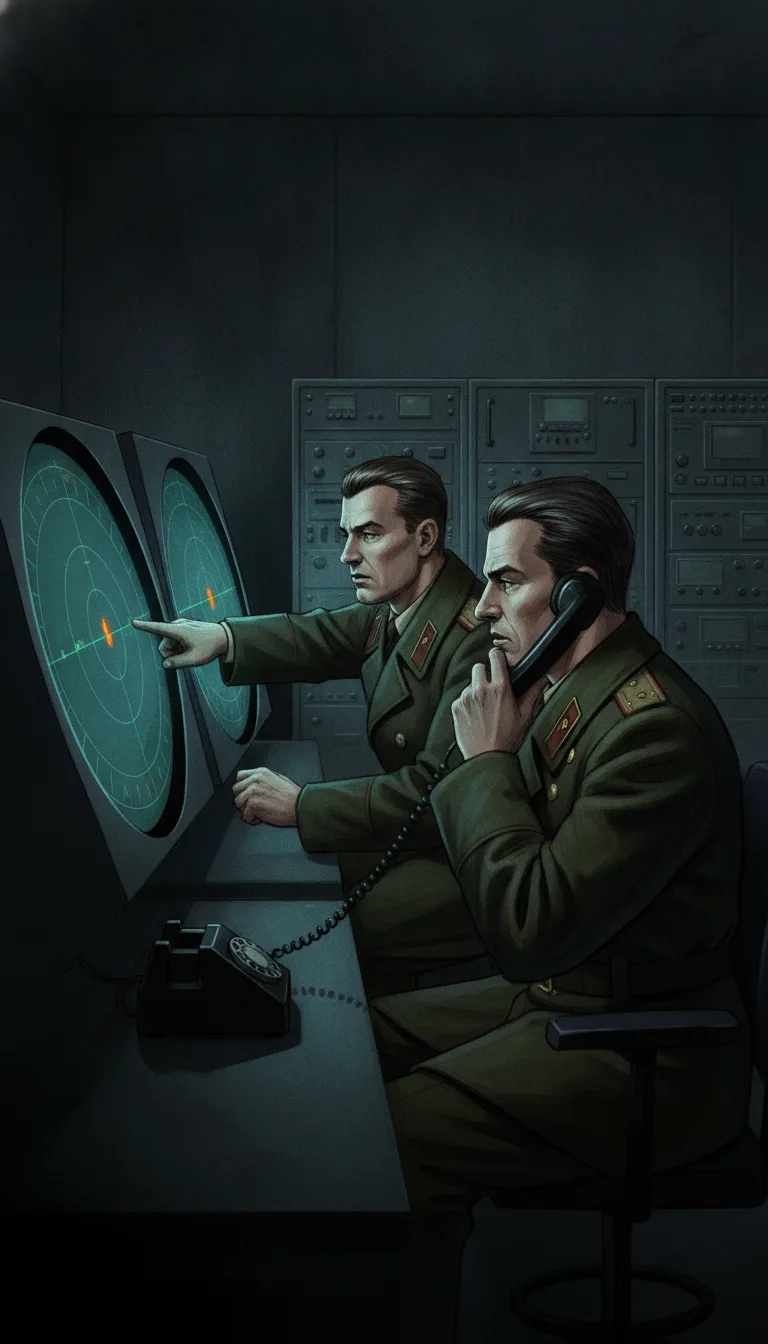
Soviet radar stations did pick him up over the Gulf of Finland. A border patrol plane was scrambled. But what followed was a cascade of bureaucratic failure and institutional paralysis. The radar contact briefly disappeared — likely because Rust descended low over a lake to avoid detection — and when operators tried to piece together what they were tracking, the signal got confused with a Soviet commercial flight in the same area. The contact was marked as resolved. No threat. Move on.
A critical factor was the Soviet chain of command itself. Intercepting an aircraft required authorization from senior commanders, and no one wanted to give that order without certainty. The memory of 1983 — when a Soviet fighter shot down Korean Air Lines Flight 007, killing 269 civilians and triggering global outrage — was still raw. The fear of another catastrophic mistake froze the system. Every officer passed the decision upward. Nobody acted.
Rust flew on, unchallenged, for nearly 800 kilometers.
The Landing That Shook the Kremlin
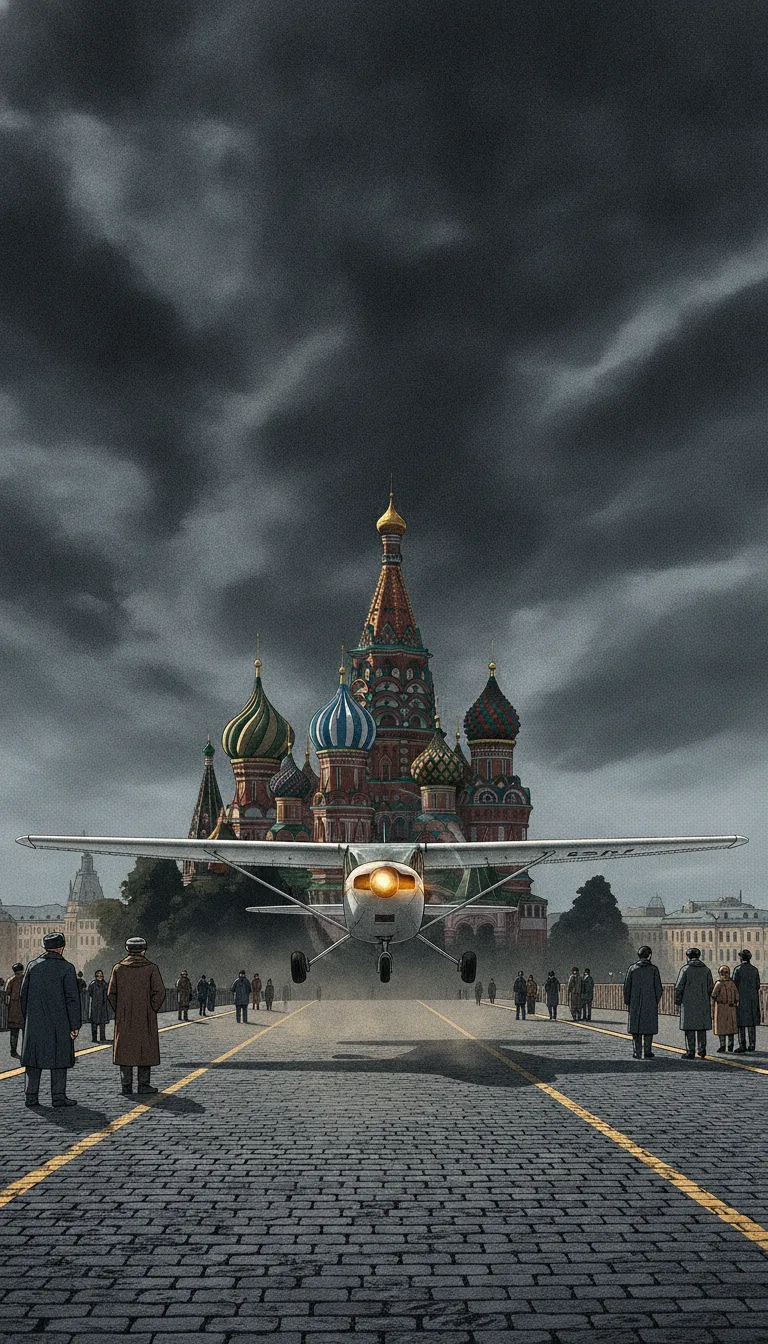
As Rust approached Moscow, he had to solve a practical problem: where exactly do you land near Red Square? The square itself was crowded and uneven. He initially spotted a wide bridge over the Moscow River — the Bolshoy Moskvoretsky Bridge — and used that as his runway, touching down in the early evening when the city was still busy with pedestrians and traffic. He taxied as close to St. Basil's Cathedral as the space allowed.
Bystanders, who had absolutely no framework for understanding what they were witnessing, reacted with curiosity rather than panic. Some asked for autographs. Someone offered him a Soviet flag to sign. Rust, wearing an orange flight suit, happily obliged. It took Soviet authorities roughly 30 minutes to arrive and arrest him. He was 18 years old.
The Political Earthquake That Followed
Mikhail Gorbachev was attending a Warsaw Pact summit in East Berlin when he received the news. Accounts suggest he was furious — not only at the military failure, but at the timing. He had recently returned from the Reykjavik summit with Ronald Reagan, where both leaders had come tantalizingly close to a sweeping nuclear disarmament deal. Gorbachev was pushing hard for reform. The Soviet military establishment, conservative and resistant, had been one of his biggest obstacles.
Rust's flight handed him a weapon. Within days, Gorbachev dismissed Defense Minister Sergei Sokolov and removed dozens of senior military commanders — estimates range from 150 to more than 300 officers disciplined or removed. The purge was the largest shake-up of Soviet military leadership since Stalin. It wasn't purely about the embarrassment; Gorbachev used the crisis to break the grip of hardliners who had been blocking his reform agenda.
Rust himself was tried in a Soviet court and sentenced to four years in a Soviet detention center for hooliganism and illegal entry. He served 14 months before being released as a goodwill gesture.
Why It Still Matters
The Rust incident is sometimes treated as a joke — the kid who embarrassed a superpower. But its consequences were serious and lasting. By weakening the Soviet military's political authority, it gave Gorbachev room to accelerate glasnost and perestroika, the reform programs that would ultimately unravel the Soviet Union itself.
One confused teenager in a rented Cessna did not end the Cold War. But he nudged history — and that is more than most people manage.