The World Before Cannae
To understand why Cannae was so shocking, you need to understand how Romans thought about themselves.
By 216 BC, Rome had spent over a century building dominance across the Italian peninsula. It had a system — almost a formula — for winning wars. Raise a large citizen army. March it forward. Let Roman discipline and numbers do the rest. The system worked. Rome lost battles sometimes, but it never truly lost. It always came back, raised more men, and ground the enemy down.
Then Hannibal Barca arrived.
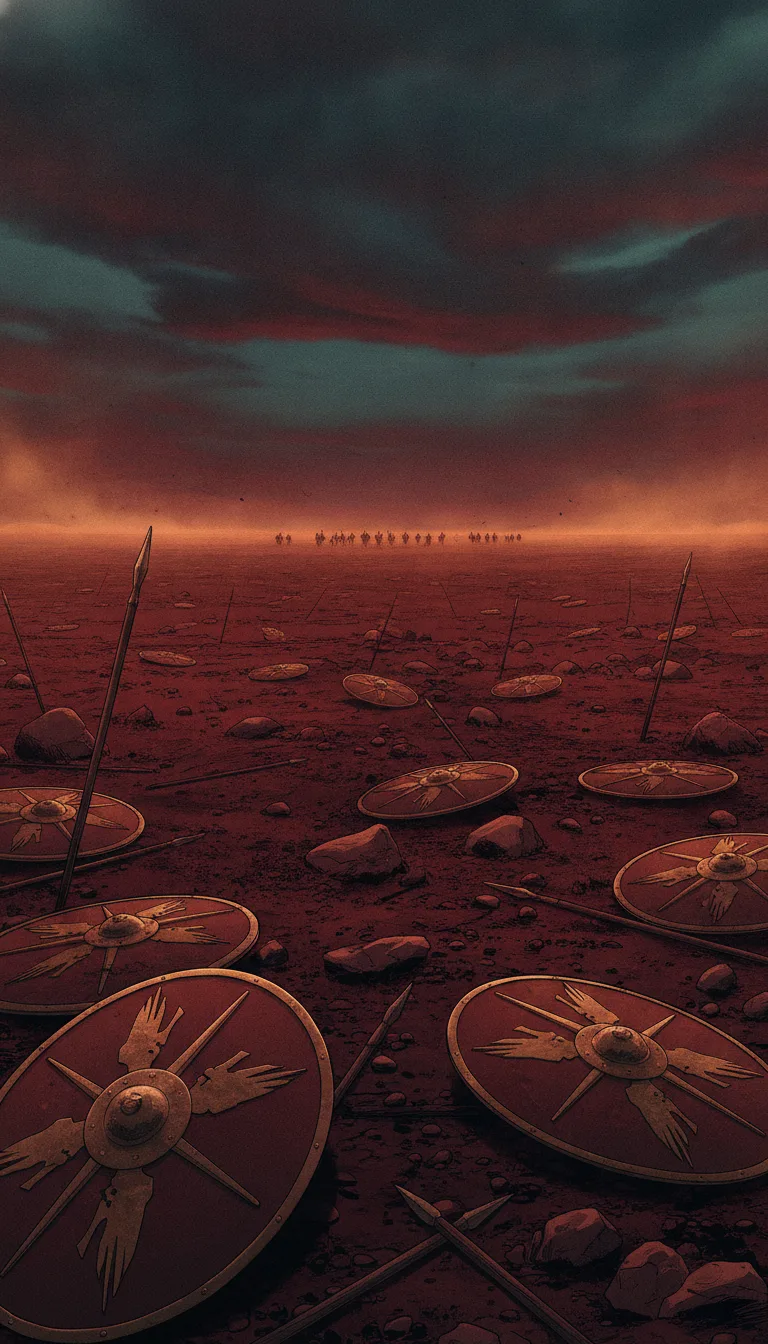
The Carthaginian general had crossed the Alps in 218 BC with roughly 26,000 surviving troops and war elephants — a journey that nearly destroyed his army before a single battle was fought. Yet within two years, he had defeated Rome at the Trebia River and Lake Trasimene, killing tens of thousands of Roman soldiers. These were not minor skirmishes. These were catastrophes. Rome's strategic confidence was shaken in a way it had rarely experienced before.
The Man Rome Could Not Stop
Hannibal was 29 years old when he launched his Italian campaign. He had grown up in military camps, the son of a Carthaginian general who reportedly made his young boy swear an oath of eternal hostility toward Rome. Whether that story is literally true or later embellishment, its spirit was real — Hannibal devoted his life to breaking Roman power.
What made him extraordinary was not just personal bravery but a mind that treated each battle as a unique puzzle. He studied his enemies carefully. He understood that Romans fought in a relatively rigid formation, pressing forward with massed infantry. He decided not to fight their strength. He would make their strength into a trap.
The Decision That Sealed Rome's Fate
After Trasimene, Rome briefly appointed a dictator named Fabius Maximus, who pursued a strategy of avoiding pitched battle — shadowing Hannibal's army, cutting off foragers, slowly strangling his supply lines. It was probably the correct strategy. Hannibal could win battles, but he could not easily replace losses far from home.
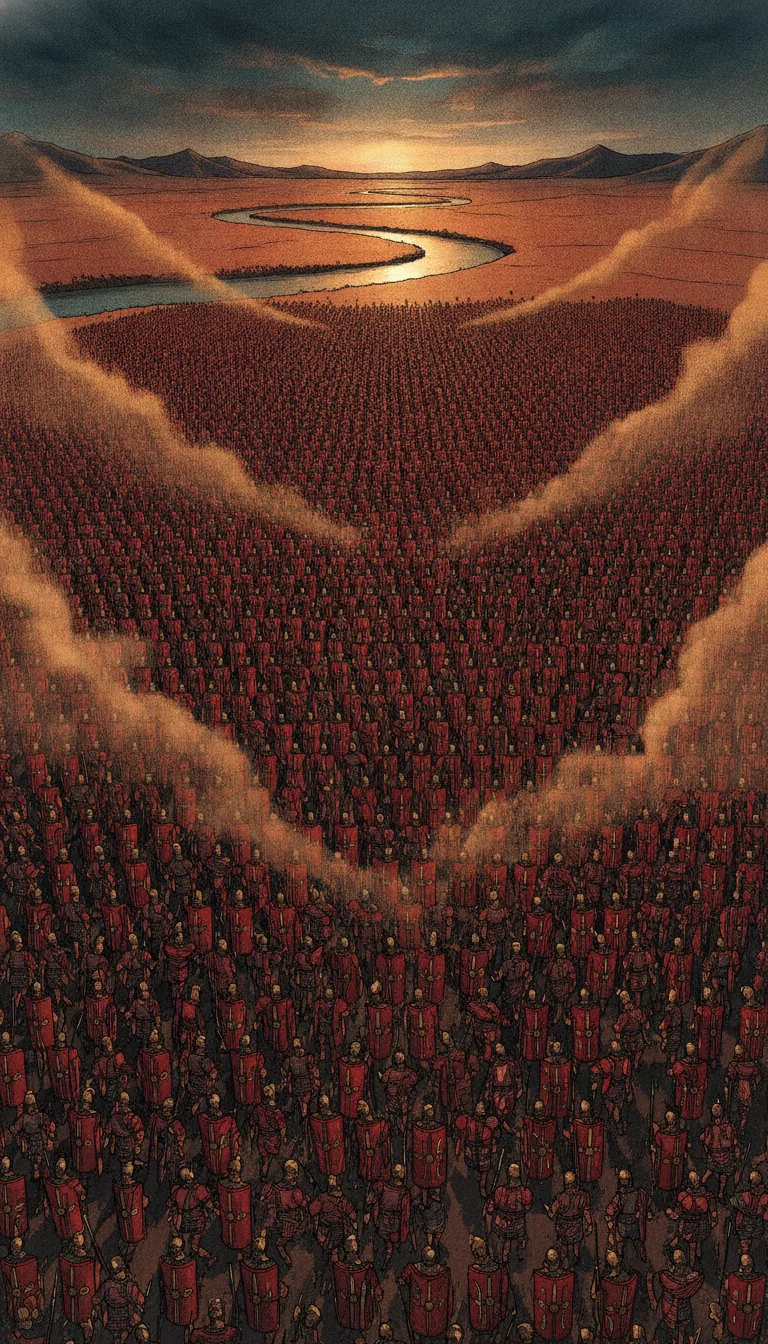
Romans hated it. They called Fabius Cunctator — the Delayer — as an insult. Political pressure mounted. When Fabius's term ended, the Romans elected two consuls — Gaius Terentius Varro and Lucius Aemilius Paullus — to command jointly. Varro in particular favored aggressive action. Rome then assembled a force of around 86,000 men near the town of Cannae in southern Italy, the largest army the republic had ever put into a single field.
Hannibal, with perhaps 50,000 soldiers, chose to fight.
The Geometry of Destruction
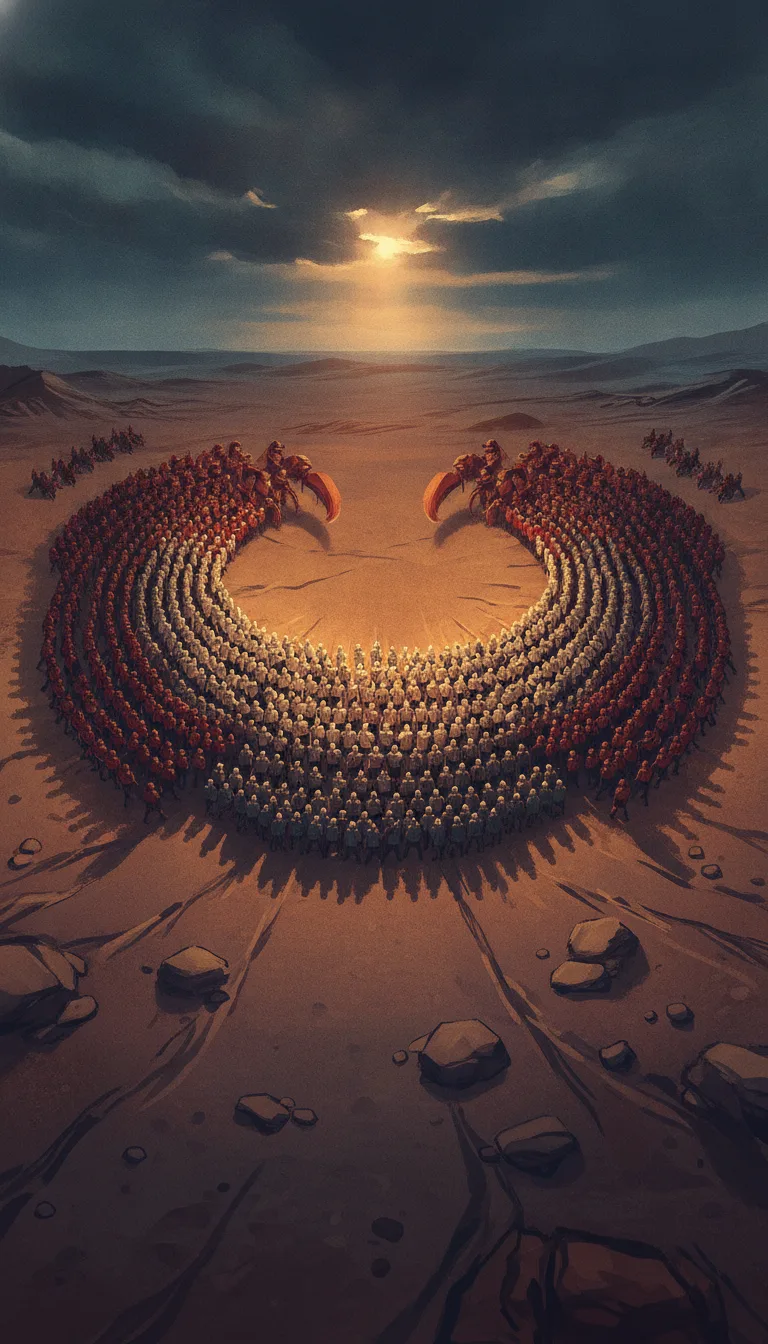
Hannibal placed his least reliable troops — Gallic and Spanish infantry — in the center of his line, forming a slight bulge pointing toward the Romans. His best African veterans held the two ends of the line. His cavalry anchored the wings.
When the Roman mass pushed forward, the weak center gave way — intentionally. Romans surged inward, sensing breakthrough. But as they pushed deeper, the African infantry on both sides pivoted inward like closing doors. Hannibal's cavalry, having defeated the Roman horsemen on the wings, swung around and sealed the rear.
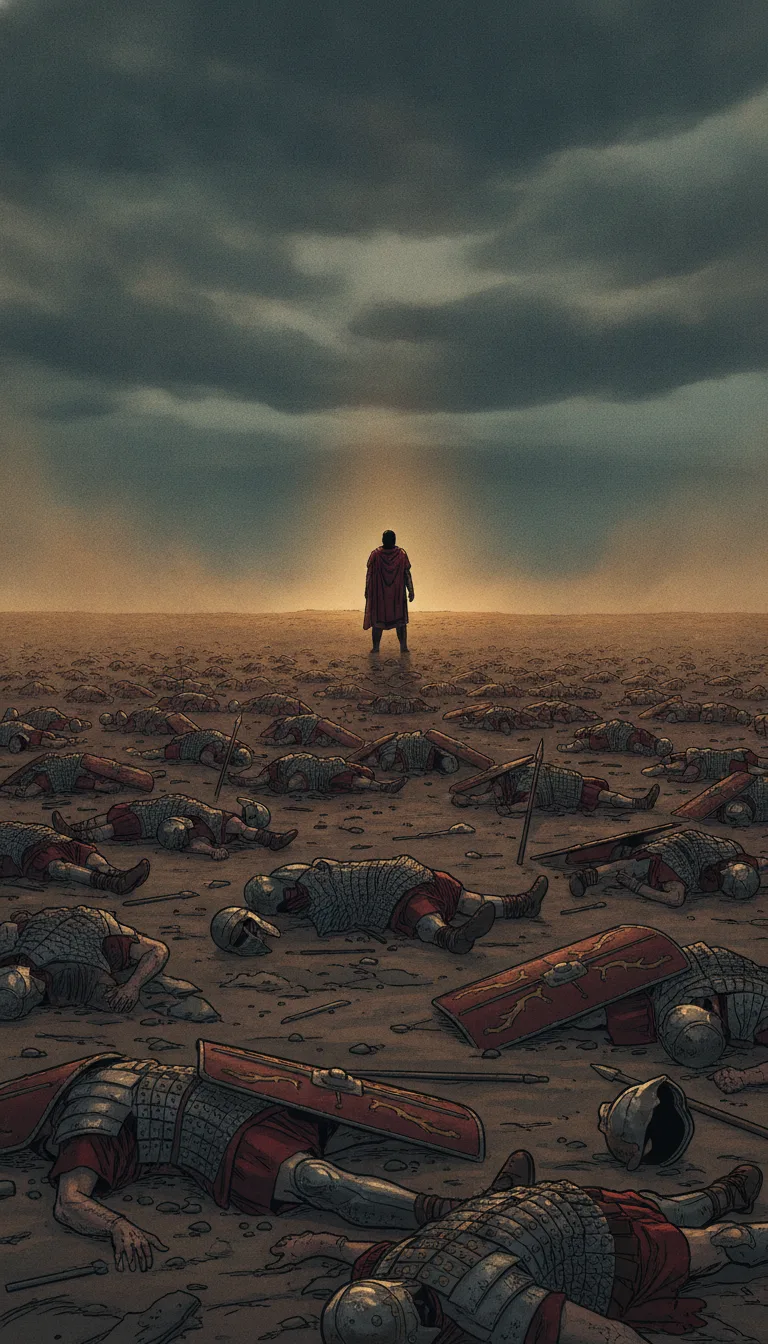
The Romans were completely encircled. Packed so tightly that many soldiers could barely raise their weapons. In that condition, Hannibal's forces simply worked inward from all sides.
Ancient sources — primarily the historian Polybius, who wrote within living memory of the battle — recorded approximately 70,000 Romans killed in a single afternoon. Among the dead was the consul Paullus himself. Varro escaped and famously was thanked by the Roman Senate for not despairing of the republic — a remarkable statement that tells you everything about how desperate the moment was.
Why Cannae Never Died
Hannibal did not march on Rome after Cannae. His reasons remain debated by historians — lack of siege equipment, the calculation that Rome's Italian allies would defect without further pressure needed. Many allies did defect. But Rome did not collapse. It rebuilt, slowly suffocated Carthage's strategic position, and ultimately won the war.
Yet Cannae outlasted Carthage entirely. Military academies from Napoleon's era to the present day study it as the definitive model of encirclement tactics — what German strategists later called Kesselschlacht, or cauldron battle. The German encirclement at Stalingrad in 1942 was openly discussed by its planners in Cannae's terms.
One afternoon in 216 BC created a template for destruction that the world has spent 2,200 years trying to repeat — and trying to survive.