The World That Made NASA Necessary
To understand why NASA was created with such urgency, you have to understand the particular anxiety of 1957 America. The Cold War was not an abstract concept — it was a daily psychological reality. Children practiced hiding under school desks. Families built backyard bomb shelters. The Soviet Union and the United States were locked in a competition that felt, to ordinary people, like it could end in annihilation at any moment.
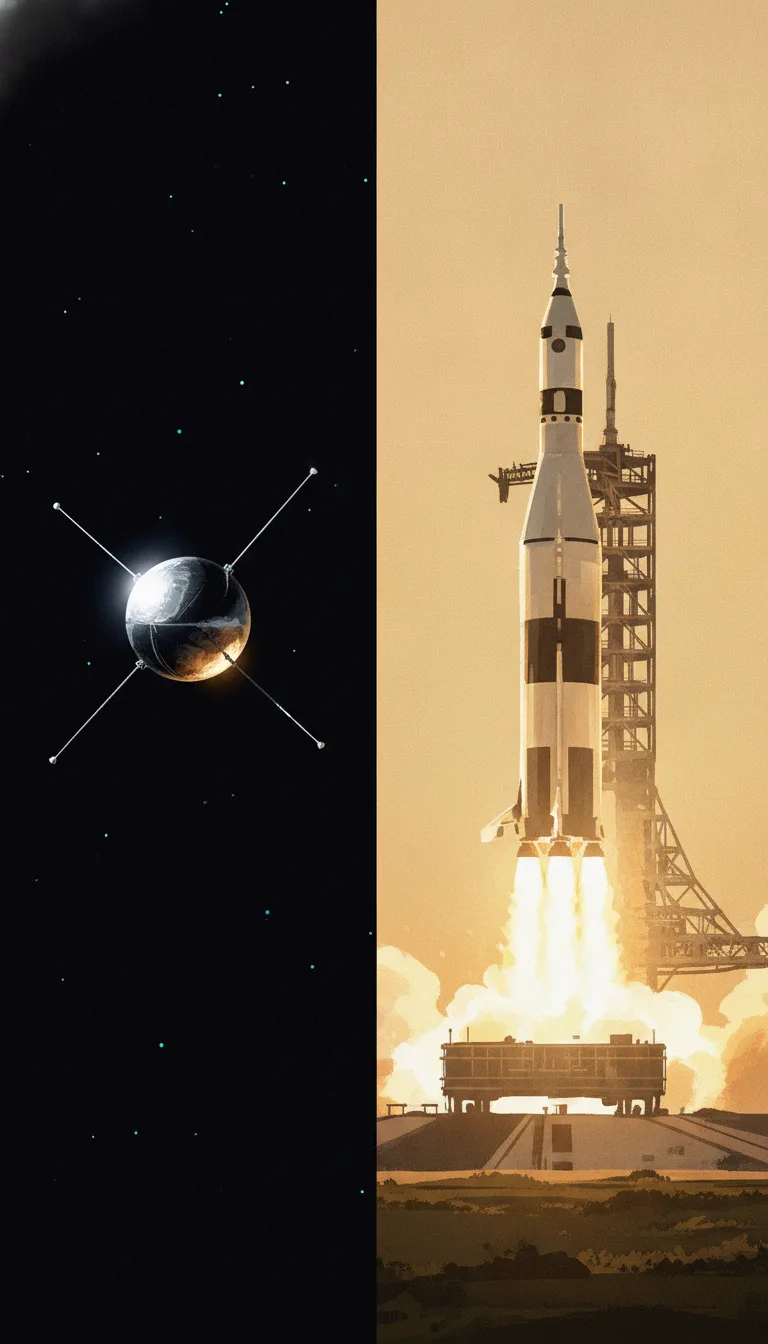
Against this backdrop, the night of October 4, 1957 hit America like a physical blow. Soviet scientists launched Sputnik — a small, polished metal sphere weighing about 83 kilograms — into Earth's orbit. It circled the planet once every 96 minutes, transmitting a simple radio beep. Americans could track it across their night sky with binoculars. That beep was the sound of technological humiliation. If the Soviets could put an object into orbit, they could, in theory, place a nuclear warhead anywhere on Earth.
The Rocket That Made It Worse
America's response was supposed to reassure the public. It did the opposite.
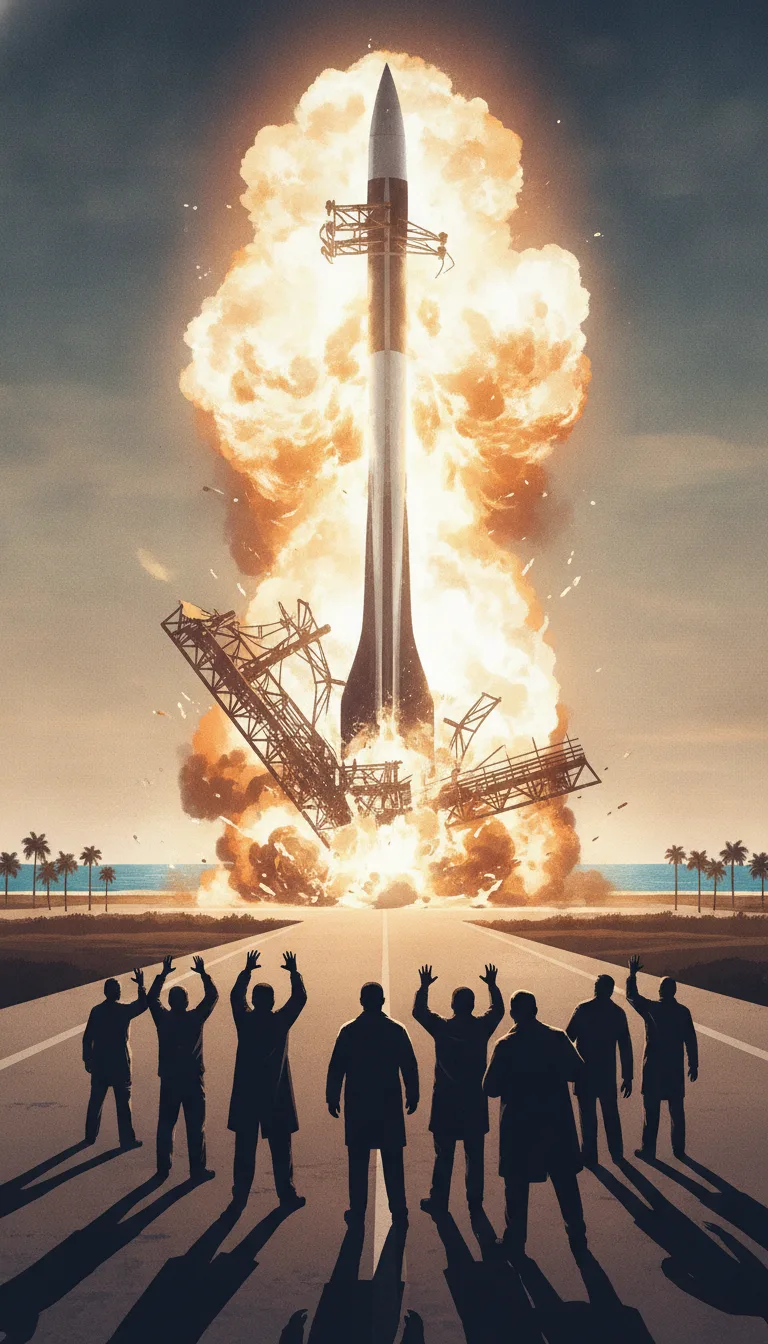
On December 6, 1957, the U.S. Navy attempted to launch its Vanguard rocket at Cape Canaveral — and the entire effort was broadcast live on national television. The rocket rose approximately one meter off the launchpad before losing thrust, falling back, and exploding in a dramatic fireball. The small satellite it was carrying rolled pathetically into the bushes, still transmitting its signal. International newspapers ran devastating headlines. One called the failed rocket Flopnik. Another: Kaputnik. The mockery was global, and it was merciless.
What this disaster exposed was a structural problem, not just a technical one. The United States had no unified space program. Research and development were scattered across competing military branches — the Army, Navy, and Air Force each operated their own rocket programs, often in fierce rivalry with each other. Scientists at different agencies barely cooperated. There was no shared mission, no central leadership, and no coherent strategy.

Eisenhower's Calculated Response
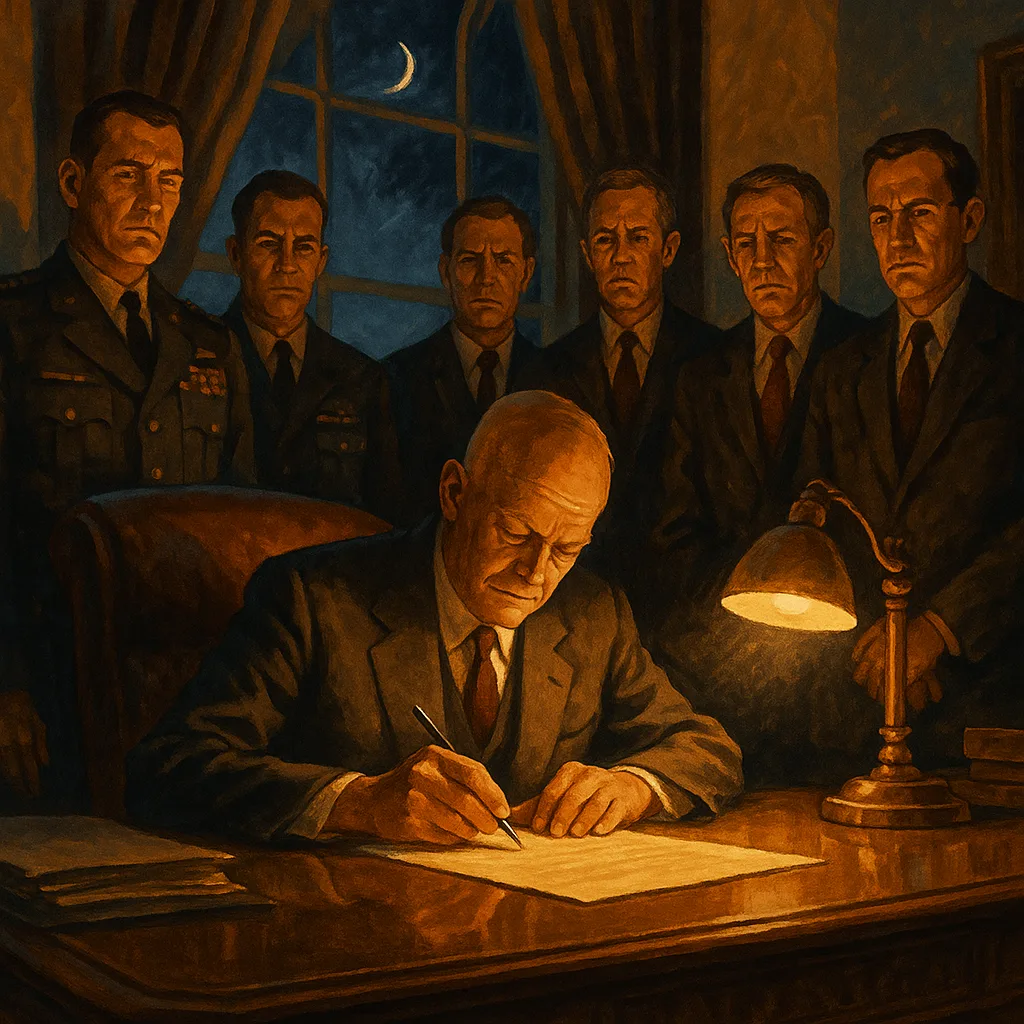
President Dwight D. Eisenhower was a five-star general who had commanded the largest military operation in history. He was not a man who panicked. But he understood clearly that America's national credibility — and genuine security — demanded a serious, organized response to Soviet space ambitions.
Critically, Eisenhower made a decision that would shape everything that followed: space exploration would be civilian, not military, in its public identity. He worried that a purely military space agency would escalate Cold War tensions dangerously and wanted to establish the principle that outer space should be a domain of peaceful scientific exploration. This was not idealism — it was strategic framing. The National Advisory Committee for Aeronautics, known as NACA, already existed as a respected civilian aviation research body. It would become the foundation for something much larger.
Working with Congress over several intense months in early 1958, his administration drafted the National Aeronautics and Space Act. The legislation moved through Congress with unusual speed, driven by genuine fear and political pressure. On July 29, 1958, Eisenhower signed it. NASA officially opened its doors on October 1 of that year, absorbing NACA's staff of around 8,000 people, its facilities, and its institutional knowledge.
What Was Inherited — and What Was Built
NASA did not begin from nothing. It inherited laboratories, wind tunnels, and a culture of rigorous aeronautical research. But it also inherited a mandate unlike anything those scientists had previously faced: beat the Soviet Union into space, and eventually, to the Moon.
The Mercury program launched the first Americans into space. Gemini developed the docking and spacewalk techniques that a lunar mission would require. Apollo, the program that would define NASA's legacy, demanded engineering solutions to problems that had never been attempted before — including keeping three human beings alive on a journey of roughly 800,000 kilometers round trip, landing on an airless world, and returning safely.
On July 20, 1969 — not quite eleven years after Eisenhower's signature — Neil Armstrong stepped onto the lunar surface.
Why the Moment Still Matters
The creation of NASA is a case study in how crisis, when met with clear-headed institutional response rather than pure panic, can produce extraordinary results. The Sputnik shock was real, but what followed was not improvised chaos — it was deliberate architecture. A structure was built. People were organized. A goal was defined.
Outer space is now a domain for satellites that run your GPS, predict your weather, and connect your phone calls. It began with a beeping metal ball, a humiliating explosion, and one afternoon in 1958 when a president decided America would go further than it had ever gone before.