A Island Worth Dying For
By the summer of 1944, both Japan and the United States understood something important: Saipan was not just another Pacific island. At roughly 72 square miles, it sat close enough to the Japanese home islands that American B-29 bombers based there could reach Tokyo directly. For Japan, losing Saipan meant losing the ability to protect its own cities. For the United States, taking it meant bringing the war to Japan's doorstep. This was why nearly 71,000 American troops landed on Saipan's beaches on June 15, 1944 — and why Japan's defenders fought with such desperate intensity.
The Japanese garrison numbered around 30,000 men under Lieutenant General Yoshitsugu Saito. They were experienced, dug in, and ordered to hold the island at any cost. The fighting that followed was some of the most brutal in the entire Pacific War — through jungle, across razor-sharp coral ridges, and into cave networks that American soldiers had to clear room by room, sometimes hand to hand.
The Decision No Samurai Could Refuse
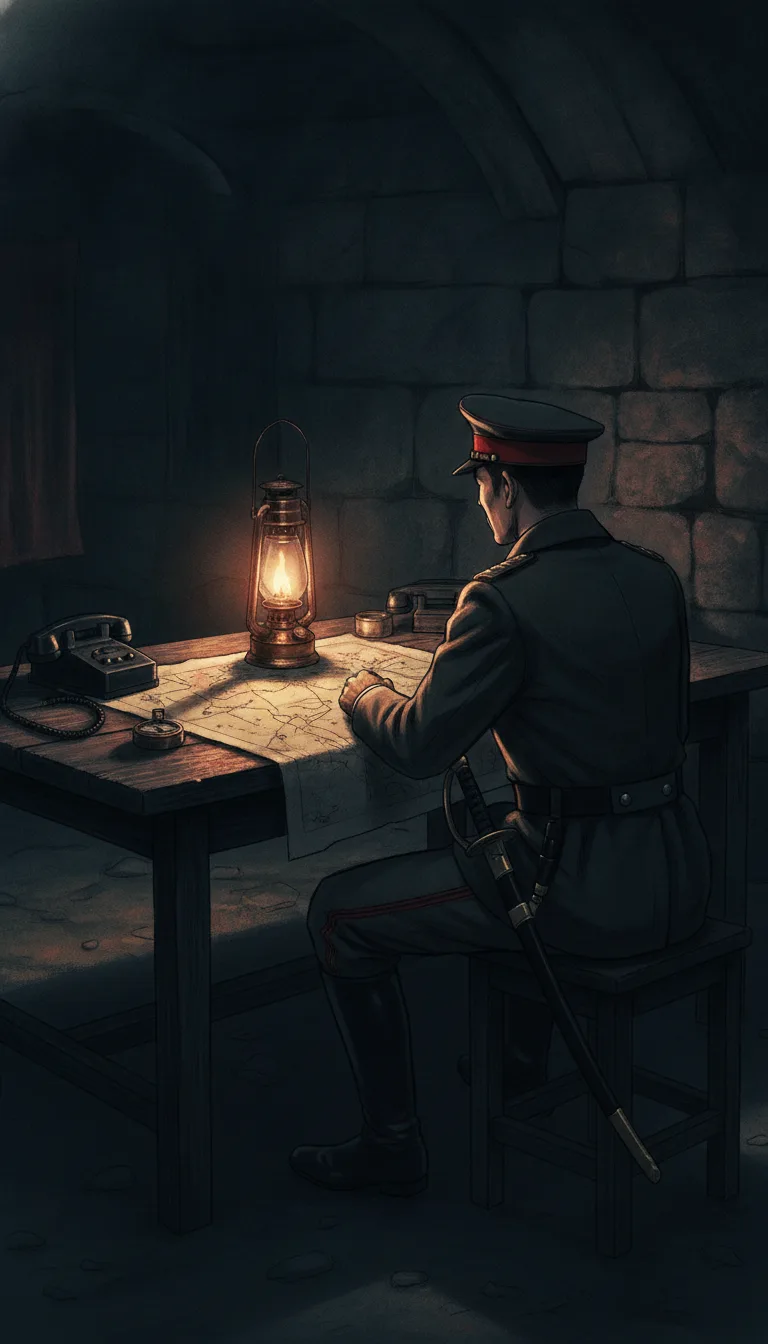
After three weeks of grinding combat, Saito's position was hopeless. His forces had been pushed to the northern tip of the island. Ammunition was running low. Resupply was impossible. On the evening of July 6, 1944, Saito held what amounted to a final meeting with his officers. He was too ill and too wounded to lead the attack himself. His message to his men was written in the language of Bushido — the warrior code that held death in battle as honorable and surrender as unthinkable.
Saito ordered a gyokusai — a Japanese term that translates roughly as "shattering like a jewel." It meant total, self-sacrificial attack. Every man who could walk, crawl, or carry a weapon was to charge the American lines. Wounded soldiers who could not fight were encouraged to take their own lives rather than be captured. Saito himself died by ritual suicide that night, before the charge even began.
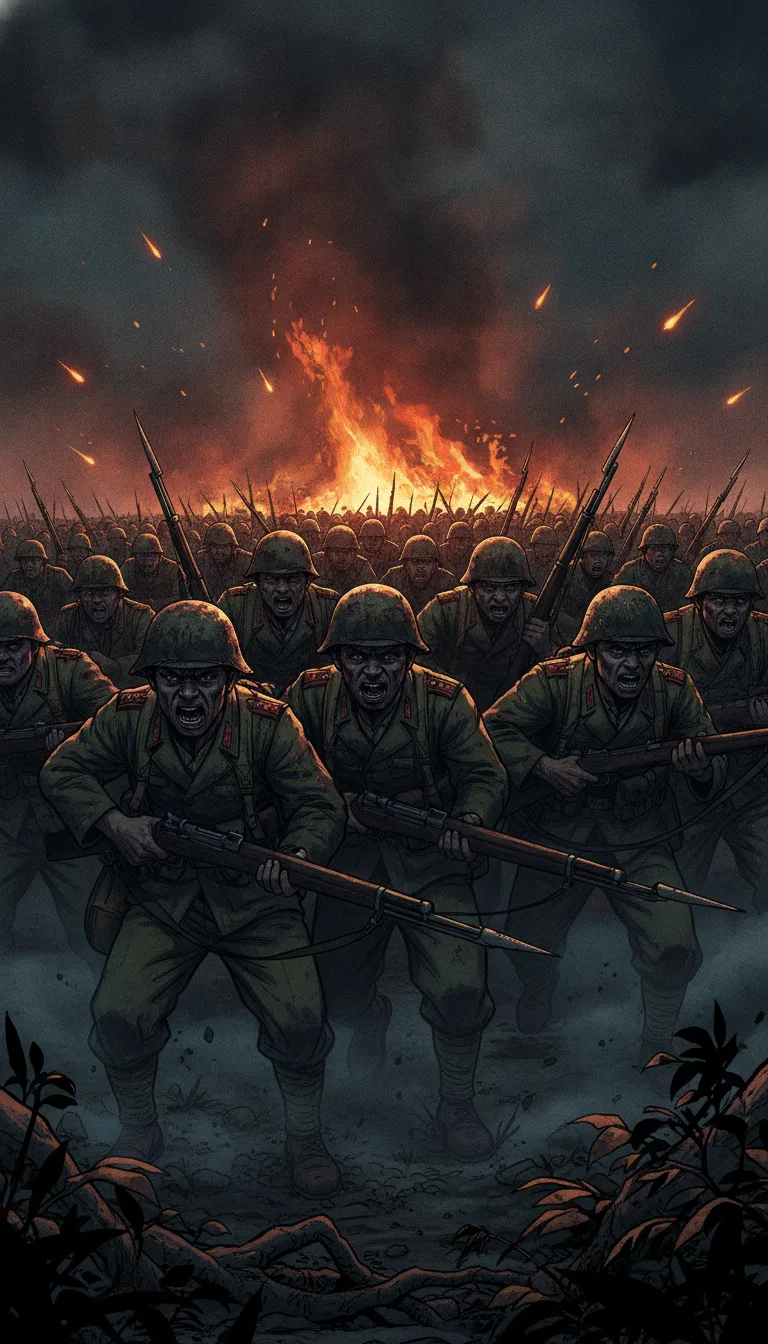
The force that assembled in the darkness numbered somewhere between 3,000 and 4,300 men. Many carried rifles. Others had only bayonets, knives, or sharpened bamboo sticks. Some were barely able to stand.
The Night the Lines Broke
At approximately 4:45 in the morning on July 7, the charge began. The wave of men crashed into the positions held by the 1st and 2nd Battalions of the U.S. Army's 105th Infantry Regiment. The sheer mass and ferocity of the attack overwhelmed the forward positions almost immediately. Both battalions were effectively cut off and surrounded. Radio communications broke down. Officers tried to hold their men together in small pockets of resistance, but the situation became chaos within minutes.
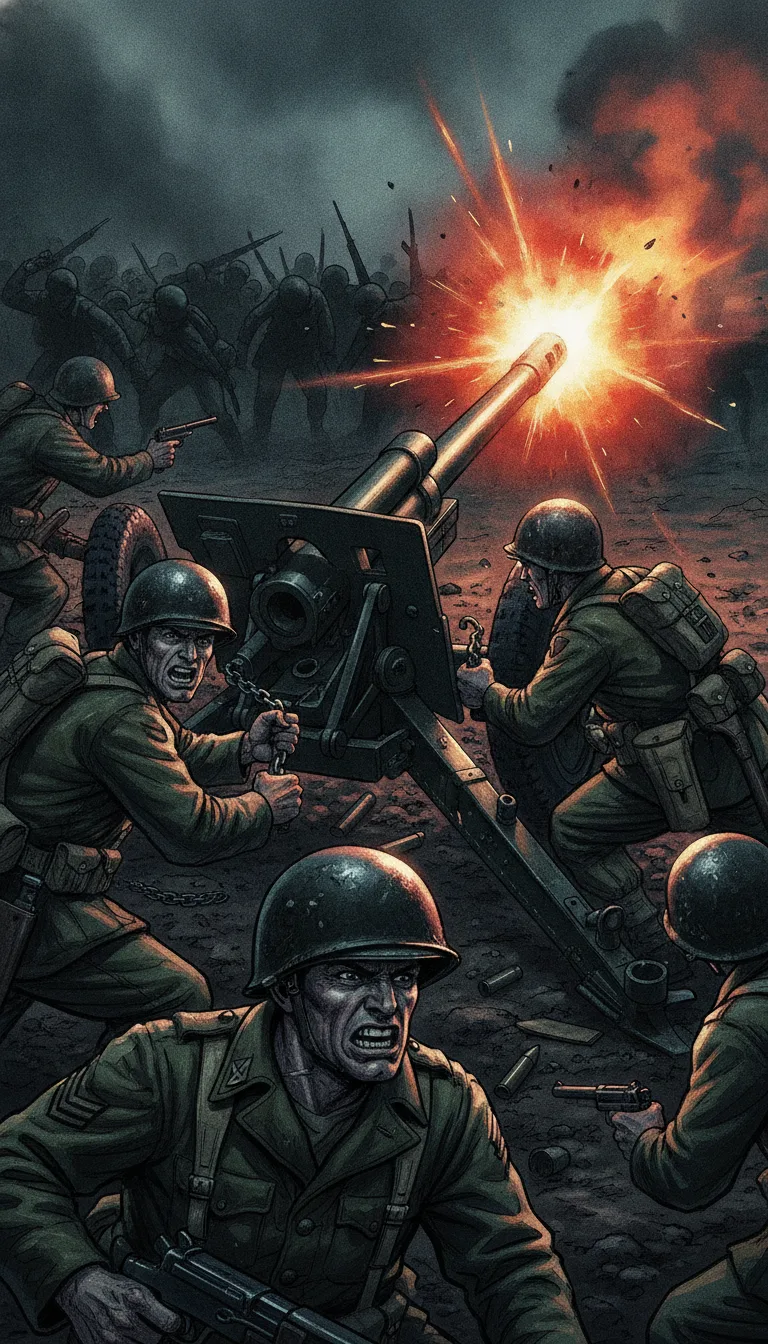
What followed over the next several hours was extraordinary. American artillerymen depressed their howitzers to fire directly into the charging mass at point-blank range — an act of desperation rather than standard procedure. Medical personnel, cooks, and support troops picked up weapons and joined the defense. Small groups of soldiers formed defensive perimeters and simply refused to move, knowing that retreating would allow the Japanese forces to break through entirely and reach the rear areas.
The fighting continued through the morning. When it finally ended, the human cost was staggering. The 105th Infantry Regiment suffered over 900 casualties, including approximately 406 killed — one of the highest single-day losses of any American Army unit in the Pacific War. On the Japanese side, more than 4,000 men lay dead across a stretch of ground that survivors described as almost impossible to cross on foot.
Why Saipan Changed Everything
The fall of Saipan on July 9, 1944 sent shockwaves through Tokyo that went far beyond the military loss. Prime Minister Hideki Tojo, one of the chief architects of Japan's war strategy, resigned within days. The Japanese government had told its people that the outer defensive ring was impenetrable. Saipan had been part of that ring. Its loss proved the promise was hollow.
For ordinary Japanese civilians, the battle carried another terrible dimension. Thousands of non-combatants on the island — settlers who had lived there for years — chose to leap from the northern cliffs rather than surrender, having been told that American soldiers would torture and kill them. Their deaths became a symbol of how completely Japan's wartime propaganda had trapped its own people.
The B-29 raids on the Japanese home islands began from Saipan just months later. The war's final chapter had opened.